Showing posts with label Week 10. Show all posts

Sunday, April 1, 2018

Week 10 Review

Estonian Proverb (OU Class Announcements)

I picked this picture because first, it's relevant, and second, no matter how hard I think about it I don't get it. What do they mean when they say lay the egg? Does it mean to continue your legacy? Why is the chicken laughing? What if the egg is used as breakfast? The world may never know the true interpretation of this mysterious proverb.


It was really cool learning about all the other April Fools-like traditions other countries have watching this video. April Fools is actually one of my favorite holidays just because the jokes and pranks tend to be really funny.

Wikipedia Trails: Tarot to Piquet

I saw Tarot cards mentioned in the class Twitter stream and it talked about its history, which I was curious of.

Tarot Cards (Wikipedia)

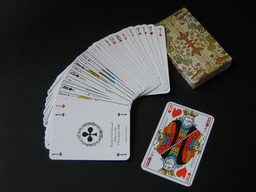
Tarot: Tarot refers to the playing cards that you often see being used for fortune telling. They were originally made to be used for playing games (go figure), but gained popularity by being used in a form of divination called Tarotology.


Tarotology: A type of cartomancy that involves Tarot cards in particular, as a way of obtaining knowledge about the past, present, and future by asking questions and revealing the cards.

Fortune Teller (Wikipedia)

Cartomancy: Divination using cards. What kind of cards are used depends on the country, with Tarot cards being most popular in English speaking countries and regular playing cards (Poker cards) being more popular elsewhere. In France, piquet cards are used.


Piquet Deck (Wikipedia)

Piquet: Piquet is a card game with 32 cards. It was developed in the 1500s and is pretty complex. Despite that, it's one of the oldest card games still played today.

Reading Notes: Jatakas Part B

White Elephant (Flickr)

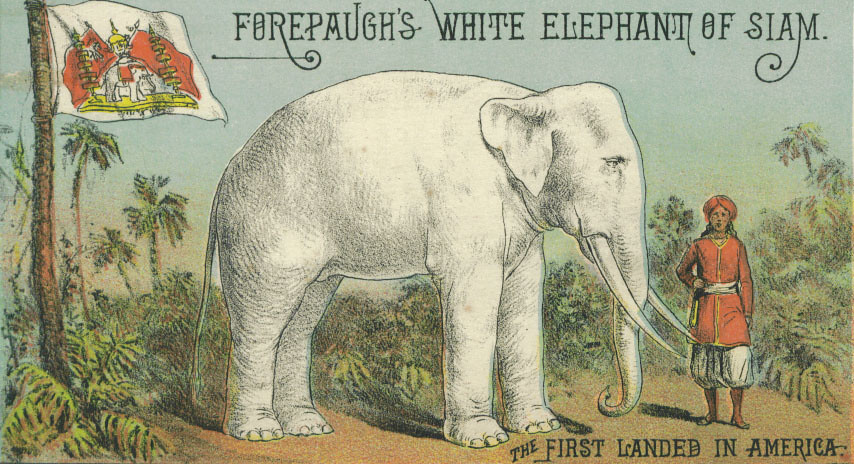
I read The King's White Elephant

I feel like I could make this story be about a giant rather than an elephant. A friendly giant from the mountains who isn't very bright.Villagers from around there find him out in the snow and take him back to the village, nurturing the giant back to health. As he recovers, a boy teaches the giant how to speak and communicate. The giant gets accepted into the village and helps lift and carry lumber around. Word gets out about the giant and many people come to visit. The giant ends up being very famous and receives gifts from all around. He insists on giving these gifts to the boy who helped him so he can help the village. After some time, the giant is offered a position at the castle of the king, which he declines and says to give it to the boy who made him who he is today.

Bibliography: The King's White Elephant by Ellen C. Babbitt

Learning Challenge: Article

Daydreaming (Times of Israel)

I read Daydreaming is good: It means you're smart by Science Daily

I've always thought of daydreaming as being creative with more active daydreaming corresponding to higher creativity, and it looks like empirical data was gathered to help corroborate the belief. I wonder just how much daydreaming and intelligence/creativity are linked. Does daydreaming increase creativity or does it just act as a signal that suggests the person is creative? Anyways I believe that creativity and intelligence can be developed and trained, so I wonder if I'd start daydreaming more as I develop. This is all given that I don't play with my phone immediately when I get bored, which I think has largely replaced daydreaming in recent years.

Growth Mindset: Another Article Again

'Brain Training' (Mind Lab Pro)

This time I read 25 Simple Ways to Develop a Growth Mindset by Saga Briggs

Although I expected the list to fall in quality by the 25th due to listing 25 things being difficult, it stayed strong all along. Just goes to show there's a lot to talk about when it comes to achieving and maintaining a growth mindset. Reading through these 'tips' is like reading a summary of all the other growth mindset articles and videos I've read and watched, with one addressing brain plasticity, another addressing the use of the word 'yet', and one discussing the redefining of 'genius'. One thing I'd like to note about 23, taking risks in the company of others, is that it also helps against procrastination. I read that you become more obligated to finish a task if you tell people around you that you're going to do that task. The only tip I didn't really get was 17, which says to separate learning from "brain training". What's brain training? Maybe some kind of mental exercise over stuff you already know, like math homework?

Tech Tips: Animated GIF Maker

So I used a reaaally old set of drawings I made when I wondered what animation would be like (it's time consuming!), and I ended up getting this result with a flat 130 ms between each frame, using the GIF maker:

Animation Test by me

When I made the drawings I used a different GIF maker that let me vary the time between each frame, and I ended up with this:

Animation Test by me

Pretty useful being able to control the time between frames, huh?

Thursday, March 29, 2018

Week 10 Planning: Desolation

Andromeda Galaxy (Wikipedia)

The story takes place in the distant future, told from the perspective of the lead pilot of a transport convoy taking a shipment of goods to another galaxy. They're travelling through space at thousands of times light speed but it's been 4 days of constant travel already. The pilot makes calculations based on fuel remaining and figures that they can switch the compression device (a device that crumples space around the ship to travel faster than light) to overdrive to more quickly compress space, burning off extra fuel and making it there faster. Though dangerous as the ships carry a lot of momentum, the pilot trusts the autopilot systems to calculate hazard trajectories and navigate them out of harms way. Activating the device, the pilot sits back for a few minutes until the ship strikes an object, knocking the pilot out.

The pilot wakes up to the red flashing of error lights, messages and beeps and sirens going off indicating a multitude of failures across the ship's systems. He checks his navigation terminal and finds that the ship overshot the galaxy by some 36,000 light years. He worriedly checks for the closest outpost and finds that it's over 10,000 light years away. He switches his destination to the outpost and attempts to activate the compression device. It fails as he realizes the ship used up all its main fuel while he was passed out, aimlessly travelling at max speed. He only has enough fuel to sustain life support for 2 weeks. Despite knowing the futility of it, he broadcasts an SOS message out into the void as he stares at the galaxy behind him, which seems so close that he could touch the stars in it.

Bibliography: The Sandy Road from The Jataka Tales by Ellen C. Babbitt

Wednesday, March 28, 2018

Reading Notes: Jatakas Part A

Eagle Nebula (Wikipedia)

I think I'd like to do a story based on The Sandy Road. Basically a couple of traders travel across a desert to a neighboring country. They carried more than enough provisions for the trip but after the navigator realizes they're close, he suggests they dump the provisions. After this, the navigator takes a rest and the oxen walk in a big circle. They wake up and find themselves where they were a day ago and panic for water, eventually finding it under a rock in the ground. I think it'd be neat if I could do a similar story in space. A transport convoy would carry extra fuel for a trip and realize that they're going to be late if they don't hurry. They figure to jettison the extra fuel they don't need and take a shortcut through a wormhole. Unfortunately the stress this puts on the ships cause the pilots to black out and autopilot to take over and eject them from the wormhole. They carry on and wake up to systems alarms. The lead transport pilot switches navigation to the closest outpost station and discovers it is 42 light years away while the ship has switched to emergency power, with only enough fuel to sustain life support systems for a few days.

Bibliography: The Sandy Road from The Jataka Tales by Ellen C. Babbitt